No expeditions in this category
The Far West's Forgotten Giant
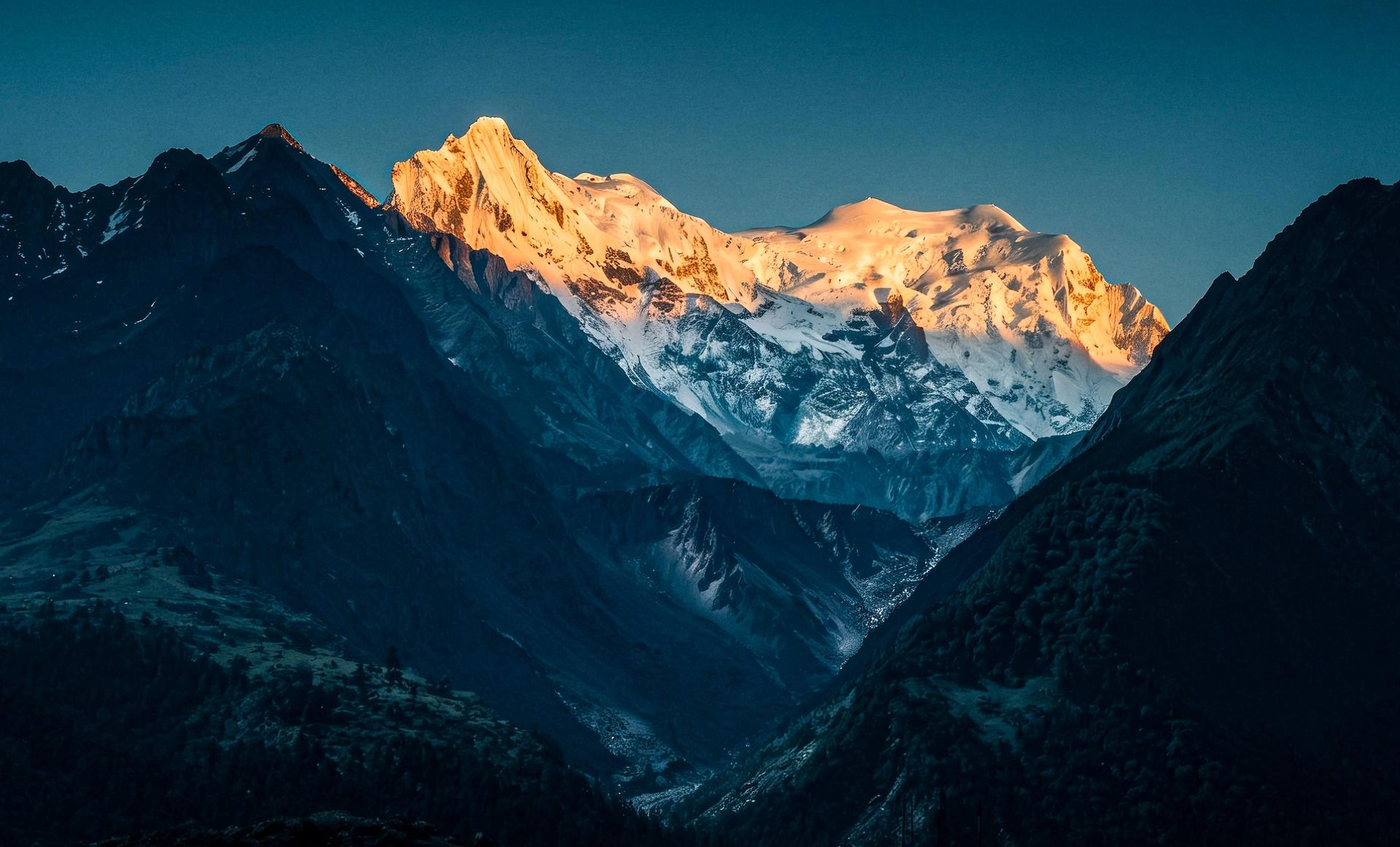
The highest mountain in Nepal's far west, in country so far off the expedition map that whole seasons end with no one on its summit. Few peaks this size are this untouched.
01 — DOSSIER FACTS
West of everything, a mountain time forgot.
Api stands where Nepal narrows toward its far-western corner, between the Indian border and the Tibetan plateau — the highest summit of the Api-Saipal range, and one of the least-climbed mountains of its height anywhere in the Himalaya. It was first climbed in 1960 by a Japanese expedition, and in the decades since, ascents have remained so rare that the mountain's climbing history can be told expedition by expedition. Climbing Api today is Himalayan mountaineering as it existed before the modern era. Thamserku's operating history in the far west — including expeditions to neighbouring Saipal — and four decades of remote-region logistics are what make an Api expedition organisable at all. We will be direct: this is an objective for experienced mountaineers, planned individually.
Api Himal Stats
Max Altitude
Additional Climb
Destination
Season
Duration
Fixed Departure
Group Size
Difficulty Level
Edition
Sherpa Support
Lead Guides
Route
Prerequisite
Api Himal Expedition Highlights
Api Himal sits in far-western Nepal, one of the country's least-visited mountain regions, with an approach that retains true expedition character through largely untouched valleys.
First climbed in 1960 and ascended only a handful of times since, Api carries an exploratory character the more frequented Himalayan peaks no longer hold.
IFMGA/UIAGM-certified lead guides with extensive high-altitude experience, supported by a dedicated 1:1 personal climbing Sherpa ratio from Base Camp to summit and return.
Carefully sequenced rotations between Base Camp and the higher camps, balancing acclimatisation, recovery, and summit readiness across a clean 28-day operational schedule from arrival to descent.
Five-star Delhi hotel before and after the climb, comfortable lodges through the far-western approach, and heated private tents with full amenities at Base Camp.
Comprehensive medical kit, emergency oxygen backup, standby rescue Sherpa team, helicopter contingency framework, Leave No Trace policy, and guaranteed gratuities and bonuses for crew.
Standard Itinerary
B — Breakfast · L — Lunch · D — Dinner
What's Included
Expedition royalty, climbing permits, conservation area, restricted-area, and applicable local authority fees
Garbage deposit, waste management, and stool transfer fees as per government regulations
Government-appointed liaison officer with full logistical support, transportation, meals, and accommodation
Comprehensive medical and emergency rescue insurance for all Nepalese expedition staff
Contribution toward route fixing by veteran Sherpa teams
Reliable weather forecasting throughout the expedition
Official Government of Nepal summit certificate upon successful ascent
Expedition gear transport between Kathmandu and Base Camp using the most appropriate logistics support
Up to 30kg of personal and expedition baggage carried by porters, mules, or yaks
Full-board accommodation in lodges and camping throughout the trek
Hygienic meals, drinking water, and unlimited hot beverages during the trekking phase
Licensed English-speaking trek guide with porter support
Complete high-camp logistics including tents, fuel, stoves, ropes, technical equipment, and high-energy provisions
Double-occupancy high-altitude tents for all summit camps
Nutritious meals and hot beverages prepared by Sherpa support teams throughout the climbing phase
IFMGA/UIAGM Certified lead guide supported by shared climbing Sherpa (1:2 ratio) from Base Camp to summit and return
Route support, emergency communications, and emergency oxygen backup with premium masks and regulators
All Sherpa and support staff wages, equipment, food, bonuses, insurance, and route-fixing costs covered
Guaranteed crew gratuities and summit bonuses for guides and climbing Sherpas
Dedicated emergency response and rescue team on standby at Base Camp and designated high-altitude locations
Private airport transfers for international and domestic arrivals/departures
Two nights' accommodation in a 5-star hotel on a BB basis
All scheduled overland transportation as per the itinerary from and to Delhi
One exclusive Thamserku Expedition duffel bag
Hosted farewell dining experience at a premium Delhi restaurant
Commemorative expedition souvenir presented upon program completion
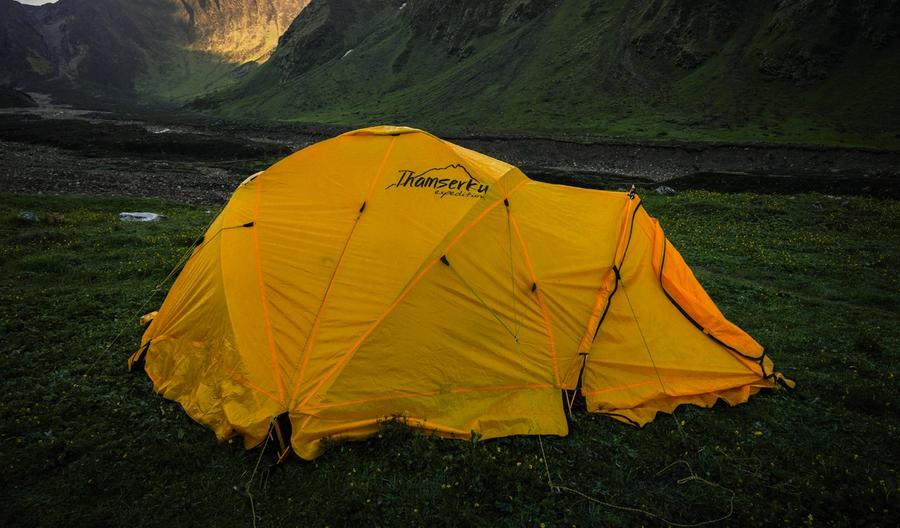
Premium Base Camp with heated dining, shared tents, shower and toilet facilities, and full camp infrastructure
Freshly supplied international and Nepali cuisine, prepared by dedicated expedition cooks with beverages
Expert Base Camp cook and kitchen team with full logistical support
Salaries, equipment, food, clothing, and allowances for all Nepalese staff
Charging facilities, emergency satellite phone access, and Base Camp–high camp radio communication
Pre-climb training covering oxygen systems, fixed ropes, equipment use, and safety procedures
Comprehensive medical support, backup oxygen systems, and essential rescue equipment at Base Camp
Not Included
International airfare, multiple entry visa for India, and Nepal entry visa fees
Additional accommodation and meals beyond the scheduled itinerary due to early arrival, delayed departure, or unscheduled return from the expedition
Personal high-altitude travel insurance, including medical, evacuation, and trip interruption coverage
All personal climbing equipment, ski equipment (if applicable), and clothing
Filming, drone, and special documentation permit fees
Any services, activities, or logistical support not specifically listed under the inclusions section
Mandatory Prerequisite
All applicants must have prior summit experience on a peak of 6,000m or above. Thamserku Expedition reserves the right to assess and verify each applicant’s climbing resume before confirming participation. Safety on the mountain begins with the selection process. All applicants must obtain multiple entry visa for India and single entry visa for Nepal.
Api Himal in Every Edition
The details above describe the Crafted Edition — our curated standard. Every Edition below is available on Api Himal. Select one to begin designing your expedition.
Alpine Edition
Lean
Bespoke Edition
Personalized
Crafted Edition
Peak-Performance
Definitive Edition
Flagship
Explorer Edition
Exploratory
| Feature | Alpine | Bespoke | Crafted | Definitive | Explorer |
|---|---|---|---|---|---|
| Expedition Consultation | Project dependent | Unavailable | Unavailable | Unavailable | As required |
| Additional Climb | Api West (7,100m), An unclimbed Summit (Add-on) | ||||
| Delhi Services | 5-star, BB | ||||
| Trekking / Lodges | Lodges / Camping | ||||
| Luggage Allowance | 30 kg |

07 — ROUTE
From Delhi to the summit. 6 points on the line.
The North-East Ridge follows the most established line on a mountain that sees only a handful of attempts per decade. Every camp decision reflects the realities of far-western Nepal — remote, infrastructure-minimal, and genuinely exploratory.
The overland approach provides gradual altitude gain. A dedicated acclimatisation day at Base Camp plus staged rotations build readiness for the upper mountain's steep glaciated terrain.
October provides the post-monsoon window for far-western Nepal. Conditions on Api are less predictable than the central Himalaya — conservative timing and flexible scheduling are essential.
"Quiet answers, before you write to us."
Api Himal is in Nepal's far north-western corner. The most practical approach follows a classic overland route through India's border regions — the same path early explorers used.
Very. Api sees only a handful of expeditions per decade. Base Camp is reached through valleys with minimal infrastructure. This is genuine expedition mountaineering.
Prior summit experience on a 6,000m+ peak is recommended. The upper mountain demands competence on steep glaciated terrain and comfort in isolated settings.
Helicopter contingency is in place, though response times in far-western Nepal are longer than in the central Himalaya. Our safety planning accounts for this reality.
Yes. The overland approach transits through India. You will need valid visas for both India and Nepal.
Design your Api Himal Expedition
Select your Edition, customize add-ons, and receive a detailed proposal with investment guidance — sent privately to your email within 60 seconds.
Design Your Expedition Response within 48 hours · Handled by senior expedition staff